On this page
A home sauna is worth it if — and honestly, only if — you’ll use it several times a week. In 2026 the entry price runs from £140 for a sauna blanket to £1,199–£2,400 for a plug-in infrared cabin, £1,595–£2,495 for an indoor traditional sauna, and £3,890–£8,300+ for an outdoor cabin, with electricity costing pennies to a couple of pounds per session. Used three times a week, a mid-priced cabin works out around £9 a session in its first year and pennies thereafter. Used four times a year, it’s the most expensive towel rail you’ll ever buy.
Prices below were checked in July 2026 against UK retailers VidaLux and Outdoor Living Hot Tubs, plus Steam & Oak’s UK buying guide for installation costs. If you haven’t settled on a format yet, start with our guide to the types of sauna for your home.
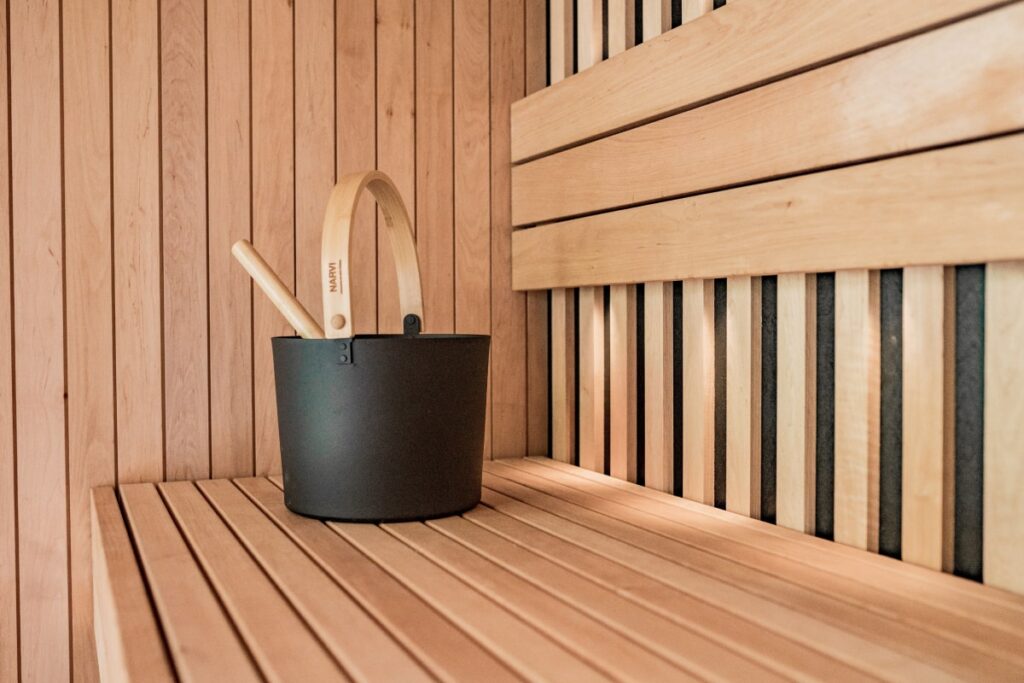
What a home sauna costs to buy in 2026
| Route in | Typical 2026 UK price | What you get |
|---|---|---|
| Sauna blanket | £140–£699 | A far-infrared wrap you lie in — see our sauna blanket guide |
| Portable heat pod | from £199 | Fold-away single-person pod (VidaLux Insta-Heat) |
| Indoor infrared cabin | £1,199–£2,400 | 1–4 person timber cabin, plugs into a normal socket |
| Indoor traditional cabin | £1,595–£2,495 | Proper electric-stove sauna, 1–4 person |
| Outdoor traditional cabin | £3,890–£8,300+ | Garden building with a 4.5–9kW stove |
Two cost lines that catch people out:
- Electrics. Indoor infrared cabins run off a standard 13A socket — no electrician needed. A traditional stove doesn’t: 4–4.5kW heaters need a dedicated 16A circuit (budget £250–£450), and 6kW+ stoves need a 32A circuit, ideally with armoured cable out to a garden cabin (£400–£900). Any new circuit is notifiable under Part P, so this is an electrician’s job, not a DIY one.
- The base. An outdoor cabin needs a level, load-bearing base — allow £400–£700 unless you already have suitable slab or deck.
What it costs to run
Electricity is the ongoing cost, and it’s smaller than most people expect. At the July–September 2026 price-cap rate of 26.11p/kWh:
| Sauna | Rated draw | Session (incl. warm-up) | Cost per session, upper bound |
|---|---|---|---|
| Sauna blanket | 0.4–0.6kW | 45 min | ~10–15p |
| Infrared cabin | 1.6–2.4kW | 1 hr | ~40–60p |
| Outdoor cabin, 4.5kW stove | 4.5kW | ~1 hr 25 min | ~£1.65 |
| Outdoor cabin, 8kW stove | 8kW | ~1 hr 15 min | ~£2.60 |
These assume the heater draws full power throughout, which it doesn’t — thermostats cycle once the cabin is up to temperature — so treat them as ceilings. Even at the ceiling, three infrared sessions a week is under £8 a month.
The health case — what the evidence actually says
The strongest evidence comes from Finland. A 2015 cohort study in JAMA Internal Medicine followed 2,315 middle-aged Finnish men for a median of 20.7 years. Men using a sauna 4–7 times a week had a 63% lower risk of sudden cardiac death than once-a-week users (2–3 times a week: 22% lower), with similar inverse associations for fatal coronary heart disease, fatal cardiovascular disease and all-cause mortality. Sessions over 19 minutes were associated with roughly half the sudden-cardiac-death risk of sessions under 11 minutes.
A 2018 review in Mayo Clinic Proceedings by the same research group links regular sauna bathing to lower blood pressure, reduced dementia and Alzheimer’s risk, and respiratory benefits, proposing mechanisms such as improved endothelial function and reduced arterial stiffness — while acknowledging “areas of outstanding uncertainty” in the evidence.
Three caveats before you take that to the bank:
- It’s observational. These studies show association, not proven cause — men who sauna five times a week may differ in other healthy ways.
- It studied Finnish men in traditional saunas. The results don’t automatically transfer to women (not included in that cohort), to infrared cabins, or to blankets.
- Weight loss isn’t on the list. Per the Cleveland Clinic, the scale drop after a session is dehydration, not fat. Anyone selling a sauna as a weight-loss device is selling you water loss.
For the fuller picture, see our guide to the health benefits of regular sauna use.
The case against
- Use-it-or-lose-it. The whole value calculation collapses if the habit doesn’t stick. Be honest about whether you’re buying a routine or the fantasy of one.
- Space. Even a one-person cabin needs roughly a square metre plus ventilation clearance; an outdoor cabin eats a chunk of garden.
- Install friction. Traditional stoves mean an electrician and Part P paperwork; outdoor cabins add a base and an armoured cable run.
- Resale value. We looked for credible UK data tying home saunas to property value and found nothing worth citing — so we won’t pretend there’s a number.
The maths that decides it
Take a £1,399 two-person carbon infrared cabin (VidaLux, July 2026). Three sessions a week is 156 a year:
- Year one: £1,399 + ~£40 electricity ≈ £9.20 per session
- Year two onwards: electricity only ≈ 25p per session
Against spa day passes or a gym membership kept mostly for the sauna, a cabin you genuinely use pays its way within a couple of years. A cabin you don’t use is £1,399 of regret in the spare room.
Verdict
Worth it if you already know you love sauna heat, you’ll realistically use it twice a week or more, and you have the space and (for traditional stoves) the electrical supply. Our types of sauna guide matches the format to your home.
Not worth it (yet) if you’ve never built the habit. Test the routine first — a season at a gym sauna or a public sauna near you, or a sauna blanket at £140–£699. Browsing the current entry-level infrared cabins on Amazon is a reasonable way to see what a returnable starter cabin costs before committing to a bigger build. And if you’re new to the heat itself, our beginner’s sauna guide covers how to actually use the thing.
Frequently asked questions
How much does a home sauna cost in the UK?
In 2026: sauna blankets £140–£699, indoor infrared cabins £1,199–£2,400, indoor traditional cabins £1,595–£2,495, and outdoor traditional cabins roughly £3,890–£8,300+. Add £250–£900 for a dedicated electrical circuit on anything bigger than a plug-in infrared cabin, and £400–£700 for a base if it's going in the garden.
How much does a home sauna cost to run?
At the July–September 2026 price-cap rate of 26.11p/kWh: a sauna blanket costs roughly 10–15p per session, a plug-in infrared cabin around 40–60p, and an outdoor traditional sauna with a 4.5–8kW stove about £1.65–£2.60 as an upper bound. The thermostat cycles once it's up to temperature, so real sessions usually cost less.
Do home saunas add value to your house?
We haven't found credible UK data that puts a number on it, so we won't invent one. Buy a sauna because you'll use it, not as a property investment.
How often do you need to use a sauna to get the health benefits?
The Finnish research the health case rests on found the strongest associations at 4–7 sessions per week, with sessions over 19 minutes — and it studied traditional saunas, not infrared cabins or blankets. The honest answer: regularly, or the health argument mostly falls away.
What's the cheapest way to find out if you'd actually use one?
Don't start at £4,000. A sauna blanket (£140–£699) or a few months using the sauna at a local gym or spa tells you whether the habit sticks. If you're still going three times a week after a winter, size up with confidence.
Keep reading

Yes — but modestly, and the weight on the scale afterwards is water, not fat. What the actual studies measured, where the viral calorie numbers come from, and the honest maths.

What regular sauna use is actually associated with — cardiovascular risk, dementia, blood pressure, colds — with the real study numbers, the caveats, and what saunas don't do.

The sauna accessories that earn their place — with named picks and 2026 UK prices: a £26.99 alder bucket, a £22.99 thermometer-hygrometer, a £12.99 wool hat — and the gadgets to skip.