On this page
The difference in one line: a sauna is hot and dry — typically 65–90°C at under 20% humidity — while a steam room is much cooler but completely saturated, so your sweat can’t evaporate and the heat feels heavier than the thermometer suggests. Same broad idea (deliberate heat exposure), genuinely different experiences — and a lopsided evidence base that favours the sauna.
Temperature figures here are from the Cleveland Clinic; the physiology comparison below is from a controlled study of dry vs steam sauna bathing.
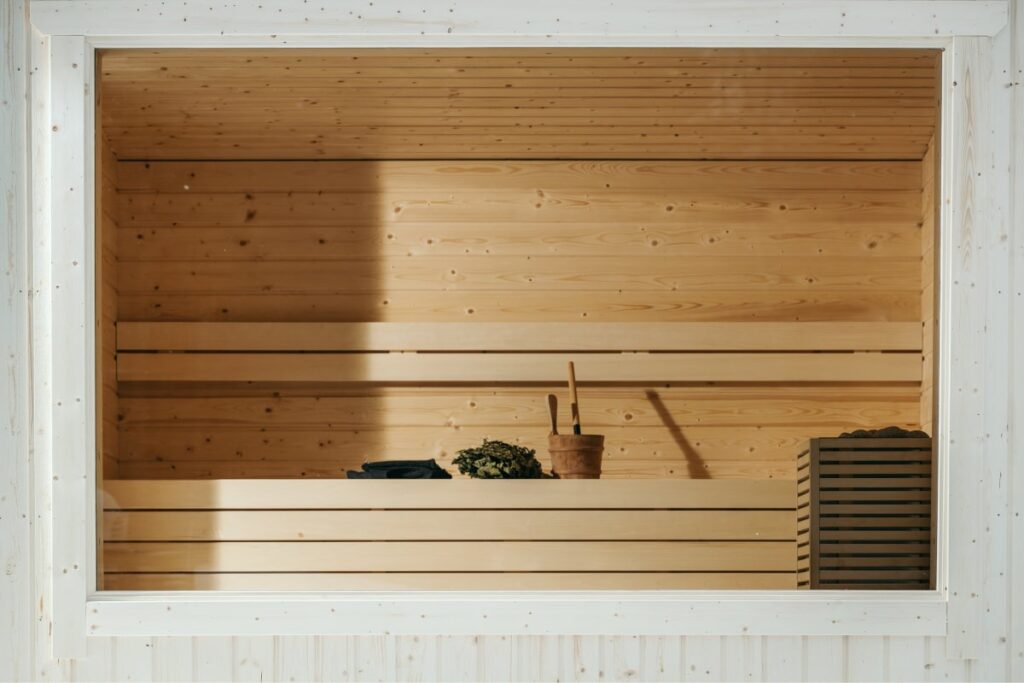
The two heats, side by side
| Sauna | Steam room | |
|---|---|---|
| Air temperature | ~65–90°C | Much lower — typically 40–50°C in spa steam rooms |
| Humidity | Under 20% (bursts of steam if you ladle water on the stones) | ~100% — saturated |
| Heat source | Electric or wood stove heating air and stones | Steam generator |
| How it feels | Sharp, dry heat; sweat evaporates and cools you | Enveloping, heavy; sweat sits on the skin |
| Surfaces | Dry timber | Wet tile/glass — everything drips |
| At home | Kit cabin; infrared versions plug in | A tanked, vapour-sealed construction project |
Cooler can be harder work — what the physiology shows
Counter-intuitively, the milder-sounding steam environment can stress the body more. In a controlled comparison, ten healthy men took matched 15-minute sessions in a dry sauna (~91°C, 5–18% humidity) and a steam sauna (~59°C, ~60% humidity). The steam condition raised core temperature more (+1.61°C vs +1.16°C), pushed heart rate up further, and scored markedly higher on physiological strain — because saturated air stops sweat evaporating, which is the body’s main cooling mechanism. The dry sauna, meanwhile, produced twice the fluid loss (0.72kg vs 0.36kg), so hydration matters most on the dry side.
Practical translation: don’t judge intensity by the thermometer. Fifteen minutes in a steam room is not the “easy version” of fifteen minutes in a sauna — it can be the opposite.
What the health research says
This is where the comparison stops being even. The long-term outcome studies people cite about heat bathing — the 2015 Finnish cohort in JAMA Internal Medicine (2,315 men over ~21 years, 63% lower sudden-cardiac-death risk in 4–7×/week users vs once-a-week) and the 2018 Mayo Clinic Proceedings review linking regular use to lower blood pressure and reduced dementia risk — were done in traditional dry saunas. That’s association rather than proven cause, in Finnish men specifically, but it exists.
Steam rooms have no comparable body of long-term research. What they have is subjective appeal: warm saturated air feels genuinely soothing on airways and skin, and that comfort is a fine reason to use one. It just isn’t evidence of treatment — for colds, congestion or anything else. Both formats share the same safety rules: 15–20 minutes, hydrate, never after alcohol, and get medical advice first if you’re pregnant, over 65 or have a heart condition (Cleveland Clinic guidance).
At home: kit versus construction
If you’re choosing what to install, the practical gap is enormous:
- A sauna is a product. Cabins arrive as kits from £1,199 (infrared, plugs into a 13A socket) to £8,300+ (outdoor stove cabins) — the full breakdown is in our types of sauna guide and the cost-vs-value maths in are home saunas worth it?
- A steam room is a building job. It needs a fully vapour-sealed and tanked enclosure, a steam generator, drainage, and the trades to fit them — you’re effectively constructing a wet room. It’s why home steam rooms are rare and mostly appear in larger bathroom renovations, while home saunas are an order-online purchase.
The budget-friendly way to get occasional steam remains your gym or spa — or, at home, our spa day at home guide covers the low-rent version (a hot shower and ten minutes of patience).
Verdict
- Choose the sauna if you want the format with the long-term research behind it, the option to own one without remodelling your house, and heat you can actually control — dry by default, steamier when you ladle water over the stones. It’s also the easy one to sample before deciding anything: there’s a map of public saunas worth a look.
- Choose the steam room if saturated warmth is what your body enjoys — airways, skin, preference — and you have access to one at a gym or spa. Just go in knowing it can be more physically demanding than it feels from the door.
- Most people’s honest answer: sauna at home, steam room when it’s someone else’s plumbing.
Frequently asked questions
Which is hotter, a sauna or a steam room?
A sauna, by air temperature — typically 65–90°C at under 20% humidity, versus a steam room's much lower temperature at close to 100% humidity. But saturated air blocks sweat from evaporating, so a steam room can feel more oppressive and put more strain on the body despite the lower number on the thermometer.
Is a sauna or steam room better for you?
The long-term evidence is heavily on the sauna's side — the Finnish cohort studies linking regular use to lower cardiovascular risk were done in traditional dry saunas. Steam rooms have plenty of fans for how they feel, especially on airways, but nothing like the same research base. Neither is a treatment for anything.
Is a steam room good for a cold or congestion?
Warm humid air feels soothing on irritated airways, and that subjective relief is real. Evidence that it treats or shortens a cold is weak — enjoy it for comfort, don't prescribe it. If you're feverish, skip heat sessions altogether.
Can you have a steam room at home?
Yes, but it's a construction project: a fully vapour-sealed, tanked enclosure with a steam generator and drainage — effectively building a wet room. A sauna cabin, by contrast, arrives as a kit and (for infrared) plugs into a socket, which is why home saunas vastly outnumber home steam rooms.
Which burns more calories?
Neither meaningfully. Any weight lost in either is water and returns when you rehydrate — the Cleveland Clinic is explicit that sweating is dehydration, not fat loss. Heat sessions are for recovery and relaxation, not weight management.
Keep reading
Yes — but modestly, and the weight on the scale afterwards is water, not fat. What the actual studies measured, where the viral calorie numbers come from, and the honest maths.

What regular sauna use is actually associated with — cardiovascular risk, dementia, blood pressure, colds — with the real study numbers, the caveats, and what saunas don't do.

The sauna accessories that earn their place — with named picks and 2026 UK prices: a £26.99 alder bucket, a £22.99 thermometer-hygrometer, a £12.99 wool hat — and the gadgets to skip.