On this page
- The two-towel rule (and what each one does)
- Materials: the actual decision
- Named picks (Finnmark Sauna, July 2026)
- Care: one rule, repeated
- How many to own (the rotation maths)
- Etiquette: the towel rules travel further than you do
- Beyond towels: when fabric does more jobs
- The bottom line
- Frequently asked questions
The sauna towel is the accessory you can’t opt out of: whatever else you buy or skip, something has to sit between you and the bench (hygiene, and universal sauna etiquette) and something has to dry you at the end. The question isn’t whether — it’s the material, and the answer is the reason Finnish saunas run on linen while British bathrooms run on terry. Prices for the picks below were checked July 2026.
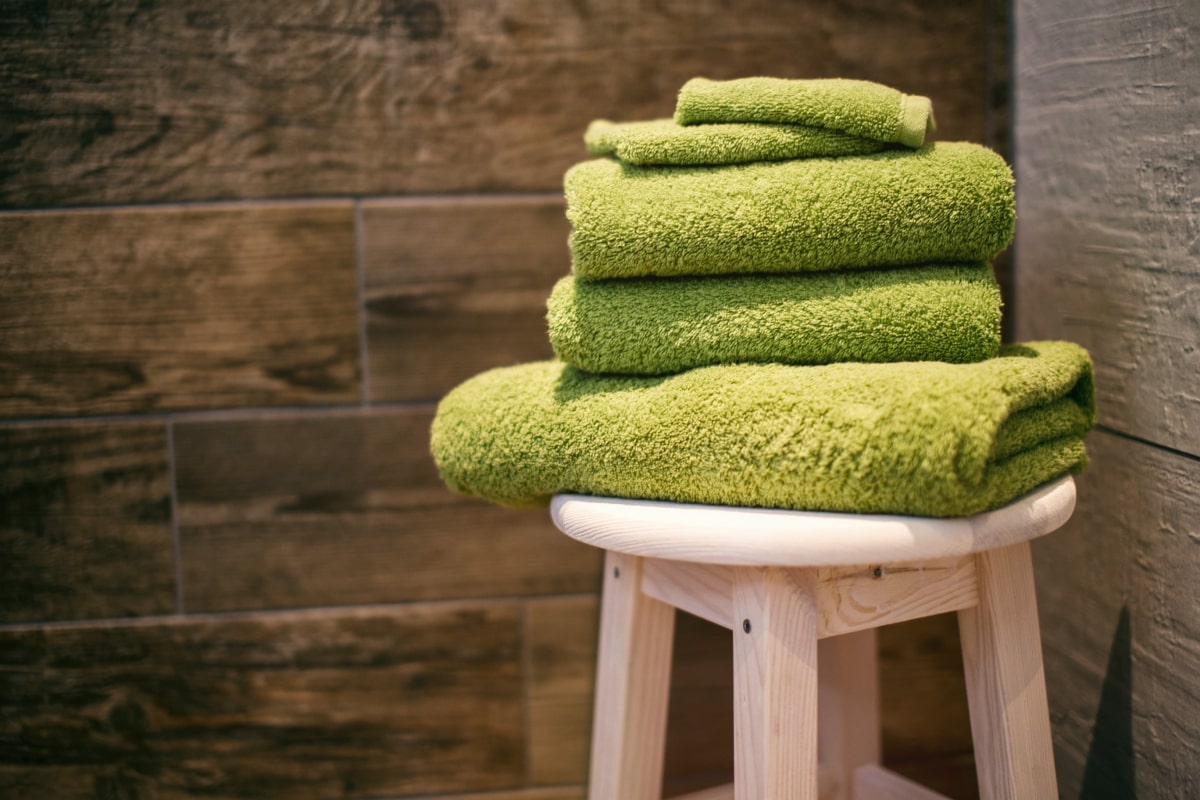
The two-towel rule (and what each one does)
- The bench towel lives in the hot room. It’s the barrier between skin and shared wood — it keeps sweat out of the benches (timber that stays dry outlives everyone) and keeps the 80°C bench surface off the backs of your legs. Big enough to sit and put your feet on: 80×160cm is the standard.
- The drying towel stays outside the hot room and does its one job after your final rinse — it should never come in with you, because a towel that’s been in a 90°C room is warm, damp and useless for drying.
- The optional third: a small hand towel (50×70cm) for wiping your face mid-session — the cheapest quality-of-life addition on this page.
Materials: the actual decision
| Material | Dries | Survives hot washes | Feel | Typical price |
|---|---|---|---|---|
| Linen (pellava) | Fastest | Decades — softens with age | Crisp, cool, textured | £15–£46 |
| Waffle cotton / linen-blend | Fast | Years | Light, airy | £8–£25 |
| Terry cotton (bathroom towel) | Slow | Goes stiff | Plush at first | already own it |
Linen is the Finnish answer for physical reasons, not nostalgia: the fibre wicks moisture along its length, so a pellava towel is dry again by your next session, resists mustiness in a warm humid cabin, and gets softer the more you hot-wash it. Terry’s plushness works against it in a sauna — it holds water, dries slowly, and repeated 60°C washes turn it to cardboard.
Waffle weaves split the difference: mostly-cotton airiness with much faster drying than terry, at prices between the two.
Named picks (Finnmark Sauna, July 2026)
| Pick | Spec | Price |
|---|---|---|
| Luhta Pellava waffle sauna towel | 80×160cm linen-blend bench towel | £45.99 |
| Luhta Pellava waffle hand towel | 50×70cm, the mid-session wiper | £14.99 |
| Rento Kenno towel | Cotton, three colourways | £7.99 |
The Luhta pellava bench towel is the buy-once option — 80×160 covers bench-sitting with feet up, and linen at this weight is a ten-year textile. The Rento Kenno at £7.99 is the honest budget answer for the drying-towel role and for guest sets. All from Finnmark Sauna’s towel collection; compare linen and waffle sauna towels on Amazon for current pricing on equivalents — the search terms that matter are “linen” or “waffle”, not “sauna”.
Care: one rule, repeated
Hot wash, no fabric softener, ever. Softener coats fibres in exactly the wax-like film that stops them absorbing — it is the single most common way good towels get ruined. Line-dry when you can (linen loves it), low tumble when you can’t. Wash bench towels after every session or two; they’re catching a full session’s sweat, which is the whole point of their existence.
How many to own (the rotation maths)
The number that keeps a home sauna civilised is higher than people budget for: with three sessions a week and bench towels washed every session or two, a two-person household wants four to six bench towels and two or three drying towels in rotation — enough that a wash cycle never leaves you improvising with beach towels. Guests add fast; the £7.99 tier exists for exactly that drawer. Under-buying towels is the most common way a tidy sauna habit turns into a laundry bottleneck.
Etiquette: the towel rules travel further than you do
Worth knowing before any public sauna trip, because towel norms are the ones tourists get wrong:
- UK and Ireland: towel on the bench under everything, swimwear usually worn in gyms and hotel spas.
- Germany, Austria, Netherlands: the towel rule is absolute — no skin touches wood, including feet — and swimwear is typically not worn in dedicated saunas. Your bench towel needs to be big enough for all of you; this is precisely what the 80×160cm format is for.
- Finland: relaxed about most things, firm about the bench towel (called a laudeliina — literally “bench linen”) and about showering before you go in.
One habit covers every country: bring a towel big enough to sit on entirely, and keep a second for drying. Nobody in any sauna culture has ever objected to too much towel.
Beyond towels: when fabric does more jobs
If you find yourself wanting the towel to stay put on the bench, that’s not a bigger towel — that’s a seat or bench cover (fitted linen covers run £26.99–£28.99 at the same retailer, covered in the accessories buying guide). And for after the session, the drying-towel role eventually upgrades into a proper sauna robe — particularly for the outdoor-cabin walk in January. Inside a sauna blanket, the towel takes yet another form: a liner between you and the vinyl, which the blanket guide covers.
The bottom line
Two towels minimum, linen or waffle over terry, and never let softener near them. £7.99 covers the budget end today; £45.99 buys the pellava bench towel you’ll still be using in 2036. It’s the least glamorous item in the accessories line-up and the one you’ll use every single session — including the spa-day-at-home sessions where warmed towels do half the luxury.
Frequently asked questions
Why do you need a special towel for a sauna?
Two reasons: the bench towel is hygiene (it's the barrier between you and shared hot wood — non-negotiable etiquette everywhere saunas exist), and ordinary heavy terry towels stay soggy between sessions and go stiff with repeated hot washes. Linen and waffle weaves dry in a fraction of the time and survive years of 60°C washing.
How many towels do you need for a sauna session?
Two: one to sit or lie on in the hot room, one to dry off after the final rinse. Regulars keep a third small hand towel for wiping sweat mid-session. Trying to make one towel do all three jobs is how you end up sitting on a wet towel in a hot room.
What is a pellava towel?
Pellava is Finnish for linen. Traditional Finnish sauna textiles are linen or linen-cotton because the fibre wicks moisture fast, dries quickly, resists going musty, and actually gets softer with years of hot washes — which is why a £45 pellava bench towel is a decade purchase, not an extravagance.
How do you wash sauna towels?
Hot wash (60°C), no fabric softener — softener coats the fibres and destroys absorbency, which is the towel's entire job. Line-dry or low tumble. Linen towels shrug this routine off for years; cheap terry goes cardboard-stiff within months.
Keep reading

Yes — but modestly, and the weight on the scale afterwards is water, not fat. What the actual studies measured, where the viral calorie numbers come from, and the honest maths.

What regular sauna use is actually associated with — cardiovascular risk, dementia, blood pressure, colds — with the real study numbers, the caveats, and what saunas don't do.

The sauna accessories that earn their place — with named picks and 2026 UK prices: a £26.99 alder bucket, a £22.99 thermometer-hygrometer, a £12.99 wool hat — and the gadgets to skip.